Studying abroad in 2026 is an expensive ambition. Between skyrocketing tuition in the UK and strict proof-of-funds requirements for Canadian study permits, the financial pressure is immense. Many students hope for a full scholarship, but the reality is that most will need a “financial engine” to support their journey.
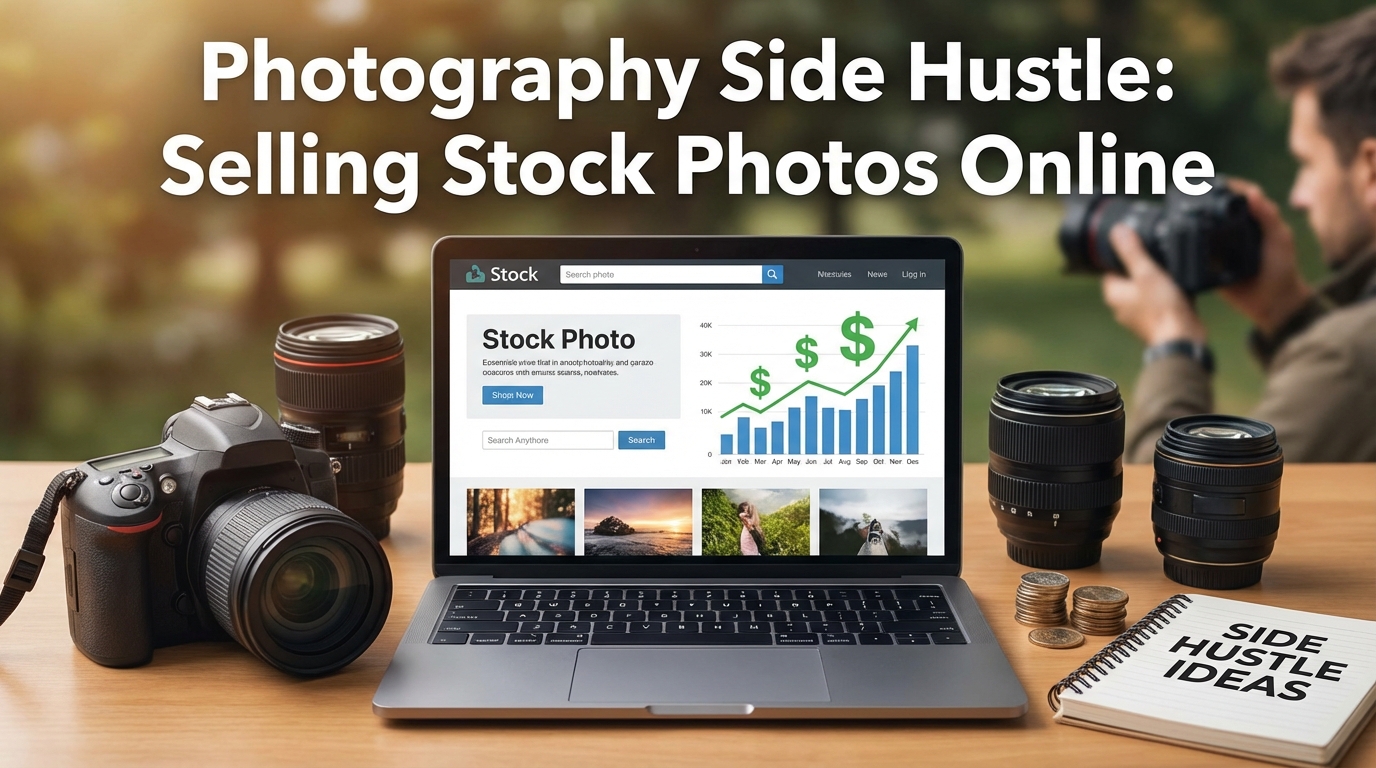
Building a photography side hustle is not a “get rich quick” scheme. You will not become a millionaire overnight by uploading three photos of your lunch. However, selling stock photography is a legitimate, scalable way to earn passive income in US Dollars or Euros. This guide will teach you how to turn your visual perspective into a digital asset that helps fund your flight tickets, application fees, or monthly groceries while you study.
2. Step 1: Market Research and Niche Selection
Before you pick up a camera, you must understand what sells. Stock agencies don’t need more “pretty flowers”; they need “authentic lifestyle” content. For students in developing countries, you have a unique advantage: Local Authenticity. Global brands are desperate for high-quality, diverse imagery of African and South Asian business settings, technology use, and modern daily life.
Requirements:
- A Research Mindset: Ability to browse “Top Selling” categories on sites like Shutterstock or Getty.
- Cultural Context: Understanding what “Modern Lagos” or “Digital India” looks like beyond the stereotypes.
- Model Releases: Permission forms signed by anyone appearing in your photos.
Pro Tip: Look for “Content Gaps.” Search for “African female software engineer” or “Indian grandmother using a smartphone.” If the results are low-quality or sparse, that is your golden opportunity to fill the void.
3. Step 2: Equipment and Technical Standards
You do not need a $5,000 Leica to start. Most modern smartphones or entry-level DSLRs are sufficient, provided you understand the technical requirements of stock agencies.
Technical Requirements:
- Resolution: Minimum 4 megapixels (though 12+ is preferred).
- Format: Highest quality JPEG or RAW files.
- Lighting: Sharp focus with minimal “noise” or grain.
- No Branding: You must remove all logos (Nike, Apple, Coca-Cola) from clothing and backgrounds using editing software or by framing the shot carefully.
Pro Tip: If using a smartphone, use a tripod. Stock agencies have strict “sharpness” tests; even a tiny bit of hand shake can lead to an automatic rejection of your submission.
4. Step 3: Choosing the Right Platforms
Not all stock sites are created equal. As a student, you want platforms that have high traffic and a fair “contributor” interface.
Top Platforms for Beginners:
- Adobe Stock: Highly integrated with Photoshop; generally offers higher royalties.
- Shutterstock: High volume of customers, though lower pay per individual download.
- Alamy: Known for better commission splits for the photographer.
- Pexels/Unsplash: Good for building a portfolio, but these are “free” sites—use them only to gain exposure, not for income.
Pro Tip: Don’t be exclusive. Most agencies allow you to upload the same photo to multiple platforms, maximizing your chances of a sale. Just ensure you haven’t signed an “Exclusivity Agreement.”
5. Step 4: Metadata and Keywording
This is the most “boring” but important step. If you don’t tag your photo correctly, no one will find it. You need to think like a Marketing Manager in London or New York who is looking for an image for their blog.
Keywording Skills:
- Conceptual Tags: “Innovation,” “Leadership,” “Diversity.”
- Literal Tags: “Man,” “Laptop,” “Office,” “Nairobi.”
- Accuracy: Never use “spam” keywords that don’t relate to the image, or the algorithm will penalize you.
Pro Tip: Use the “5 W’s” method for titles: Who is in the photo? What are they doing? Where are they? When (season/time)? Why is it significant?
6. Sample Checklist: The Contributor’s “Ready-to-Upload” List
Before you hit “Submit” on a batch of 50 photos, use this checklist to ensure you aren’t wasting your time on rejections.
Markdown
### STOCK PHOTOGRAPHY UPLOAD CHECKLIST

[ ] TECHNICAL QUALITY
    - Image is in focus (check at 100% zoom).
    - No visible sensor dust or digital noise in shadows.
    - Horizon is straight.

[ ] LEGAL COMPLIANCE
    - No visible logos on shirts, laptops, or buildings.
    - Model Release signed for every identifiable person.
    - Property Release signed for private landmarks/interiors.

[ ] METADATA & SEO
    - Title is descriptive (min. 5 words).
    - At least 20 relevant keywords included.
    - Category selected (e.g., Technology, People, Business).

[ ] FINANCIAL SETUP
    - Tax interview completed (W-8BEN for non-US residents).
    - Payment method linked (PayPal, Payoneer, or Skrill).
    - Minimum payout threshold understood.
7. Common Mistakes to Avoid
In my decade of advising, I’ve seen many students fail because of these three specific errors:
- Copyright Infringement: This is the #1 reason for account bans. You cannot take a photo of a person wearing a shirt with a giant Adidas logo and sell it. You must “clone out” the logo in post-processing or avoid it entirely.
- Over-Editing: Beginners often “over-saturate” colors or use heavy filters. Stock buyers want clean, “natural” looking photos that they can edit themselves to fit their brand’s aesthetic.
- Low Consistency: Many students upload 10 photos, don’t see a sale in the first week, and quit. This is a volume game. Successful contributors often have portfolios of 500 to 1,000+ images before they see a steady stream of “coffee money” or rent assistance.
8. FAQ
Q: Do I need a professional camera to start? A: No. Most stock agencies now accept high-quality mobile photography. Focus on good lighting (daylight is free!) and interesting compositions. As you earn, you can reinvest that money into a second-hand DSLR.
Q: How do I get paid if I am in a country like Nigeria where PayPal is restricted for receiving funds? A: Most major stock platforms (Adobe, Shutterstock) offer Payoneer as a payment option. Payoneer is widely accessible in Nigeria and India and allows you to receive USD/EUR/GBP which you can then withdraw to your local bank account.
Q: How many photos do I need to upload before I make money? A: There is no magic number, but data suggests that earnings typically become noticeable once you have 200+ high-quality, keyworded images in your portfolio. Consistency—uploading 5 to 10 photos a week—is better than uploading 100 once and stopping.
Final Thoughts
Selling stock photography is an excellent way to build a “global” income stream. It teaches you market research, digital discipline, and intellectual property management—all skills that will make your CV stand out when you eventually apply for internships in your host country.