The excitement of seeing “Visa Approved” on your passport often blinds you to the logistical nightmare of moving your entire life across the Atlantic. For a student coming from Lagos (30°C) or Mumbai (35°C), the concept of “Canadian Winter” (-20°C) is abstract until you step out of Pearson Airport and the wind hits your face.
The most common mistake students make is emotional packing. You pack 10kg of rice (which you can buy in Canada) but forget to pack a universal travel adapter (which costs $30 at the airport). You pack your favorite “winter jacket” from home, only to realize it is merely a windbreaker by Canadian standards.
Moving to Canada is expensive. Airline baggage fees for overweight luggage are brutal. You cannot afford to waste space on items that are useless or easily available.
In this guide, you will learn the strategic “lean packing” method: what to buy at home to save money, what to buy in Canada to survive the cold, and exactly what documents you need in your hand luggage to avoid deportation at the border.
Step 1: The “Hand Luggage” Sanctuary (The Immigration File)
When you land in Canada, you do not go straight to baggage claim. You go to Immigration. If your checked bags get lost (which happens frequently), you must still survive the first 24 hours.
The “Do-Or-Die” Pouch: Keep these documents in a plastic folder in your backpack, NOT your checked luggage.
- Passport: With the valid Visa Stamped.
- Port of Entry (POE) Letter of Introduction: This is the paper IRCC sent you when your visa was approved. It is not the visa stamp. You swap this paper for your Study Permit at the border.
- Letter of Acceptance (LOA): The original offer from your university.
- Proof of Funds: Recent bank statement or GIC certificate. The officer may ask to see it again.
- Enrollment Letter: If you are a returning student.
- Address of Accommodation: Write down the address of your Airbnb or student dorm. You need it for the declaration card.
Pro Tip: Keep a black or blue pen in your pocket. You will need to fill out a Customs Declaration Card on the plane or at the kiosk. Asking to borrow a pen in a line of 200 people is stressful.
Step 2: The “Winter Gear” Strategy (Buy Here vs. Buy There)
This is where students waste the most money.
Buy at Home (Nigeria/India):
- Thermal Base Layers (Inner wear): These are the thin, tight clothes you wear under your jeans and shirt. They are often cheaper in local markets (e.g., Decathlon in India) than in Canada. Pack 3-4 sets.
- Jeans/Trousers: Good quality denim is expensive in Canada. Bring 5-6 pairs.
- Underwear and Socks: Bring a massive supply. Laundry in student dorms is coin-operated and expensive ($3-$5 per load). You don’t want to do laundry every 3 days.
Buy in Canada (Do NOT buy at home):
- The Winter Coat (Parka): Do not buy a heavy jacket in Lagos or Delhi. It will likely be cotton-filled and useless against -15°C wind. Wait until you arrive. Go to stores like Winners, Walmart, or Marshalls to get a rated winter coat ($100-$150) that is waterproof and windproof.
- Winter Boots: You need boots with “Grip” for ice. Fashion boots from home will make you slip and fall. Buy these in Canada.
Pro Tip: Wear your heaviest shoes (sneakers or timberlands) and your hoodie on the plane. This saves weight in your checked luggage.
Step 3: Electronics and The “Voltage” Trap
Canada runs on 120 Volts. Nigeria and India run on 220-240 Volts. This difference is critical.
What NOT to Bring:
- Electric Kettles, Irons, Hair Dryers, Trimmers: If you plug a Nigerian clipper into a Canadian socket, it will spin slowly and barely work. If you plug a Canadian device into a Nigerian socket (when you visit home), it will explode. Leave high-wattage heating/motor appliances at home. Buy them in Canada ($15-$20 at Walmart).
What to Bring:
- Laptops and Phones: Modern chargers are “Dual Voltage” (Input: 100-240V). Check the sticker on your charger. If it says 100-240V, it is safe.
- Universal Travel Adapter: Canadian sockets use two flat pins (Type A/B). You need an adapter to fit your round-pin plugs.
Pro Tip: Bring a Power Strip (Extension Box) from home only if it is universal. Better yet, buy a Canadian power strip on Day 1, so you can plug in multiple devices with just one travel adapter.
Step 4: Food and Culture (The Customs Rule)
You will miss home food. But be careful—Canadian Border Services Agency (CBSA) is strict.
Allowed:
- Dried Spices: Ground pepper, turmeric, curry powder, crayfish (must be dried and ground).
- Processed Food: Indomie, Garri (labeled), packaged snacks.
Banned (Will lead to fines of $1,300+):
- Fresh Meat/Chicken: No beef, no suya, no chicken.
- Fresh Fruits/Vegetables: No plantains, no mangoes.
- Dairy: No milk or soft cheese.
Strategy: Bring the expensive, lightweight spices (Saffron, specific soup mixes, dried peppers). Do not bring 20kg of Rice or Beans. You can buy Basmati rice and Beans at Walmart or No Frills for a reasonable price. Save your luggage allowance for clothes.
Pro Tip: Label every food item in English. If the officer asks “What is this?” and it is a bag of unmarked brown powder, they will toss it. Label it: “Dried Melon Seeds (Egusi).”
Step 5: Medication and Eye Care
Healthcare in Canada is excellent but slow to access for non-emergencies, and dental/vision is expensive.
The “Pharmacy” Bag:
- Prescription Meds: Bring a 3-month supply of any specialized medication you take. You must have the doctor’s prescription in English with you.
- Glasses/Contacts: If you wear glasses, bring 2 spare pairs. An eye exam and new glasses in Canada can cost $300-$500.
- Antibiotics: In Canada, you cannot buy antibiotics over the counter. You need a doctor’s note. If you are prone to infections, bring a course prescribed by your home doctor, just in case.
Pro Tip: Painkillers are different. In Nigeria/UK, we use “Paracetamol.” In Canada/USA, it is called “Acetaminophen” (Brand name: Tylenol). They are the same drug, just different names.
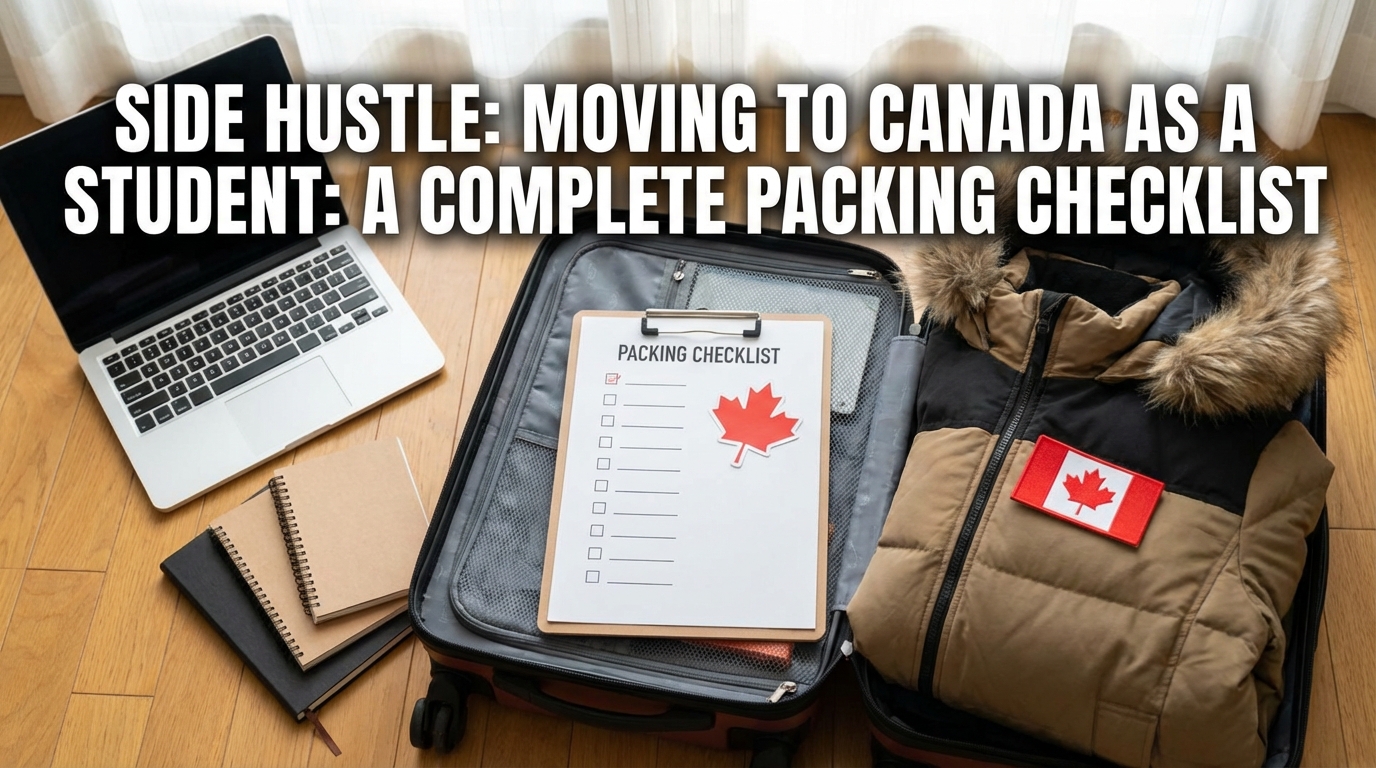
Sample/Template: The Ultimate Packing Checklist
Copy this list and tick items off as you pack.
Plaintext
[THE CANADA STUDENT PACKING LIST]

HAND LUGGAGE (BACKPACK)
[ ] Passport (with Visa Stamp)
[ ] Letter of Introduction (POE Letter)
[ ] Letter of Acceptance (University)
[ ] Proof of Funds (Bank Statement/GIC)
[ ] Address of accommodation printed out
[ ] 2 Black Pens
[ ] Travel Adapter (Universal)
[ ] Phone Charger & Power Bank
[ ] Laptop
[ ] USD/CAD Cash ($500 - $1,000 in small bills)
[ ] 1 change of clothes (in case checked bag is lost)

CHECKED LUGGAGE (2 x 23kg usually)
Category: Clothing
[ ] 5-7 T-shirts
[ ] 3 Hoodies/Sweaters
[ ] 5 Pairs of Jeans/Trousers
[ ] 1 Formal Outfit (Blazer/Suit for presentations)
[ ] 4 Sets of Thermal Inner wear (Top & Bottom)
[ ] 14 Pairs of Socks / Underwear
[ ] 1 Traditional Outfit (For cultural days)
[ ] 1 Pair of Flip-flops (for inside the house/dorm showers)

Category: Toiletries & Meds
[ ] Toothbrush/Paste (Travel size)
[ ] 3-Month supply of prescription meds (with letter)
[ ] Spare Glasses/Contact Lenses
[ ] Moisturizer (Winter makes skin very dry - bring Shea Butter/Vaseline)

Category: Food (All Dried/Labelled)
[ ] Spices (Pepper, Curry, Thyme, etc.)
[ ] Dried Fish/Crayfish (Vacuum sealed)
[ ] Specialized snacks from home

Category: Electronics
[ ] Spare phone charging cables
[ ] USB Drive / Hard Drive (Backup your files)
[ ] Ethernet cable (Optional, for dorms)

DO NOT PACK:
[ ] Fresh meat/fruit
[ ] Heavy winter coat (Wear it or buy there)
[ ] Bedding/Pillows (Takes too much space, buy at IKEA)
Common Mistakes to Avoid
- Packing Liquids in Hand Luggage: The “100ml Rule” applies internationally. If you have a big bottle of lotion or perfume in your backpack, security will throw it in the trash. Put all liquids >100ml in your checked bags.
- Carrying Too Much Cash: If you carry more than $10,000 CAD (or equivalent) in cash, you must declare it. If you don’t, they can seize it and fine you. It is safer to carry $1,000 for immediate expenses and keep the rest in a bank card/travel card.
- Locking Bags with Non-TSA Locks: If security wants to search your bag and you used a cheap padlock from the local market, they will cut the lock (or cut the zipper). Use TSA-approved locks or use cable ties (which they can cut easily without damaging the bag).
FAQ
Q: Can I bring my PlayStation/Xbox? A: Yes, usually. Most modern consoles (PS4/PS5, Xbox Series X) have “Universal Power Supplies” inside (100-240V). You just need a new power cable (cheap) or a plug adapter. Double-check the label on your console to be sure.
Q: Should I exchange money at the airport? A: No. Airport exchange rates are terrible. Exchange a small amount ($200) at your home bank before leaving. When you arrive, use your debit card at an ATM in the city to get cash, or visit a currency exchange in the city center for better rates.
Q: What if my luggage exceeds 23kg? A: You will pay. A lot. Most airlines charge $75-$100 for an overweight bag. It is cheaper to buy an extra baggage allowance online before you go to the airport than to pay the overweight fee at the counter. Weigh your bags at home first.