
The university selection process is rigged to confuse you. Universities spend millions on marketing to make their campus look like a paradise and their degree look like a golden ticket.
For a student from Lagos, Mumbai, or Nairobi, the stakes are incredibly high. You are not just choosing a school; you are betting your family’s life savings on a future visa and career. The most common tragedy I see is not a student getting rejected, but a student getting accepted to the wrong university—one that is too expensive, in a city with no jobs, or has a “prestigious” name that local employers don’t actually care about.
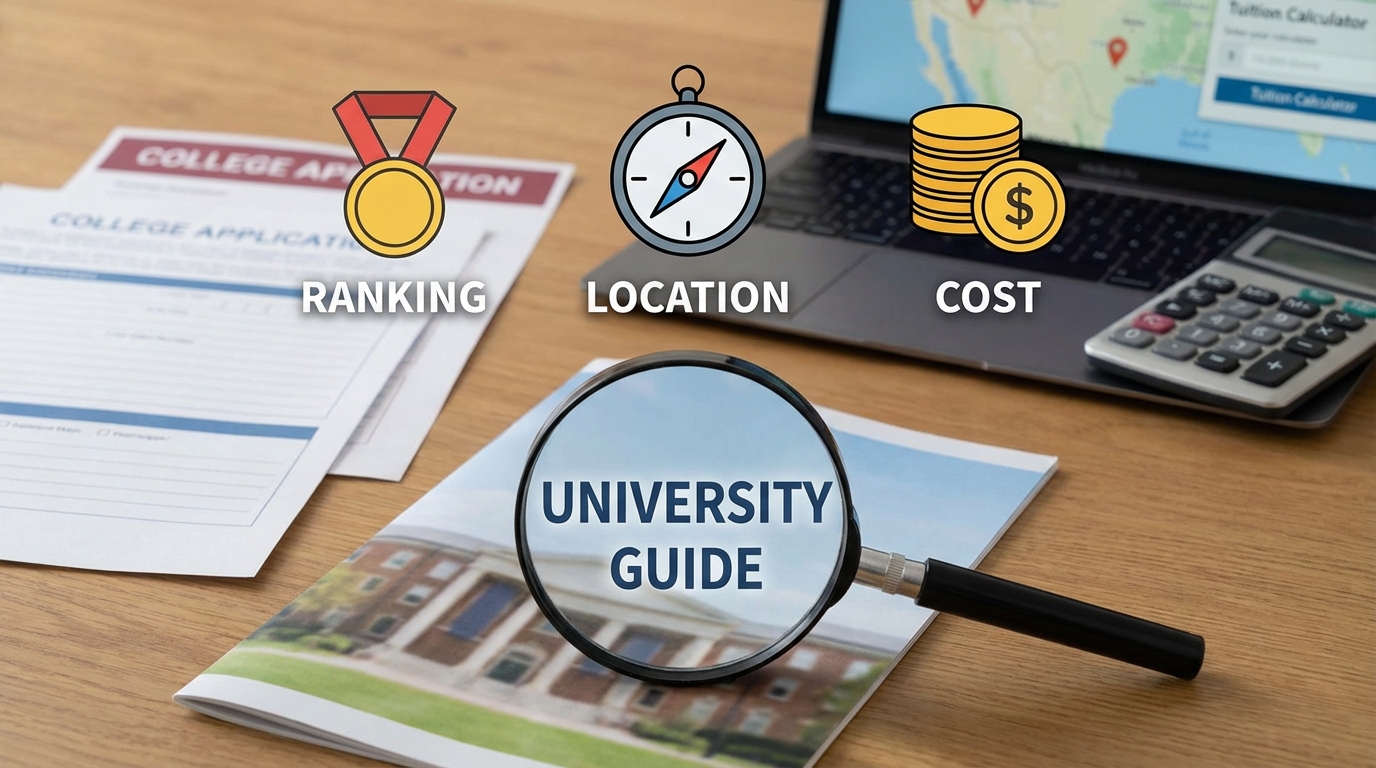
In this guide, you will learn how to ignore the glossy brochures and make a decision based on Return on Investment (ROI). You will learn to balance the “Holy Trinity” of study abroad: Ranking, Location, and Cost.
Step 1: Ranking (The “Prestige” Trap)
Most students obsess over the QS World Rankings or Times Higher Education lists. They think, “If it is not in the Top 100, it is not worth it.” This is a dangerous myth.
The “Subject Ranking” Rule: Global rankings measure research output (how many papers professors publish). They do not measure how good the teaching is or how employable you will be.
- General Ranking: Doesn’t matter as much as you think.
- Subject Ranking: Matters immensely.
Example: University A might be ranked #10 globally but #50 for Engineering. University B might be ranked #100 globally but #5 for Engineering because they have a specific partnership with Boeing or Tesla.
- Verdict: Go to University B. Employers hire specialists, not generalists.
Pro Tip: Ignore the “Overall” rank. Go to the “By Subject” filter on QS or Times Higher Education. If you are studying Supply Chain Management, look for schools near logistics hubs, even if they are not “Ivy League.”
Step 2: Location (The “Job Market” Factor)
You are not going abroad just to study; you are going there to network and find a job. Your location dictates your opportunities.
The “Big City” vs. “College Town” Dilemma:
- Big Cities (London, New York, Toronto):
- Pros: Massive job market. You can intern part-time at major companies during your semester. Networking events happen every night.
- Cons: Extremely high cost of living (rent can be $1,500+ for a room).
- College Towns (Coventry, West Lafayette, Halifax):
- Pros: Cheap rent. Strong campus community.
- Cons: Few local jobs. You might have to move immediately after graduation to find work.
The “Regional Economy” Check:
- If you study Oil & Gas: Go to Texas (USA) or Alberta (Canada).
- If you study Tech: Go to California (USA) or Waterloo (Canada).
- If you study Finance: Go to London (UK) or New York (USA).
Pro Tip: Use LinkedIn to search for “Alumni.” Type the university name and your target company (e.g., “Coventry University” + “Jaguar Land Rover”). If you see zero alumni working there, the location might be wrong for your goals.
Step 3: Cost (The “Hidden” Fees)
The tuition fee listed on the website is only half the story.
The “Total Cost of Attendance” (COA): You must calculate the COA, which includes:
- Tuition: The academic fee.
- Living Expenses: Rent, food, transport. (Often underestimated by universities).
- Health Insurance: Mandatory for international students (can be $500–$2,000/year).
- Books/Supplies: $1,000/year.
Public vs. Private (USA Specific):
- State Universities (Public): Usually cheaper tuition ($20k–$35k). Large class sizes.
- Private Universities: Expensive tuition ($40k–$60k), but they often give more financial aid to international students.
Pro Tip: Freeze the currency exchange rate in your mind. If the Dollar or Pound gets stronger against the Naira or Rupee next year, can your family still afford the second year of tuition? Always leave a 20% buffer in your budget for currency fluctuation.
Step 4: The “3-Tier” Strategy
Do not put all your eggs in one basket. Divide your choices into three categories to ensure you get admitted somewhere.
- 2 Dream Schools (The Reach): High ranking, expensive, or highly competitive. (10-20% acceptance chance).
- 2 Target Schools (The Match): Your GPA matches their average perfectly. Good location. Affordable. (40-60% acceptance chance).
- 1 Safety School (The Backup): Lower ranking, cheaper, high acceptance rate. (80%+ acceptance chance).
Sample/Template: The University Decision Matrix
Do not make this decision in your head. Put it on paper. Copy this template into Excel or Google Sheets.
Plaintext
[UNIVERSITY COMPARISON MATRIX TEMPLATE]

INSTRUCTIONS:
Fill out one column for each university. Rate "Subject Rank" and "Location" on a scale of 1-10.

| FACTOR                     | UNIVERSITY A      | UNIVERSITY B      | UNIVERSITY C      |
|----------------------------|-------------------|-------------------|-------------------|
| **Name** | [e.g., Univ of Leeds] | [e.g., Univ of Warwick] | [e.g., Teesside Univ] |
| **Course Name** | [MSc Data Science]| [MSc Computer Sci]| [MSc IT]          |
| **Tuition (Per Year)** | £24,000           | £29,000           | £16,000           |
| **Cost of Living (Est)** | £12,000           | £14,000           | £9,000            |
| **TOTAL COST (1 Year)** | £36,000           | £43,000           | £25,000           |
| **Scholarship Offer?** | No                | £5,000            | £2,000            |
| **Subject Ranking** | Top 50            | Top 20            | Top 80            |
| **Location Type** | Major City        | Campus/City       | Small Town        |
| **Alumni Network (LinkedIn)** | Strong          | Very Strong       | Moderate          |
| **Post-Study Work Visa?** | Yes (2 Years)     | Yes (2 Years)     | Yes (2 Years)     |
| **Deposit Required** | £3,000            | £5,000            | £4,000            |

DECISION SCORE (1-10):     [   ]               [   ]               [   ]

FINAL VERDICT: __________________________________________________
Common Mistakes to Avoid
- Choosing Based on Friends: “My best friend is going to Manchester, so I will go there too.” This is the fastest way to ruin your career. Your friend might be studying History while you are studying Engineering. Manchester might be great for one and average for the other. Choose your own path.
- Ignoring the “Modules” (Curriculum): You might sign up for “Computer Science” expecting to learn AI and Python, only to find out the course focuses on hardware and old theory.
- Fix: Download the “Course Handbook” or “Module List” from the website. Read the summary of every single class you will take.
- Assuming “I Can Work to Pay Tuition”: “I will pay the first semester, and then work part-time to pay the rest.” This is mathematically impossible. In the UK/Canada/USA, you are usually limited to 20 hours of work per week. At minimum wage, this barely covers your rent and food. It will never cover your tuition. If you rely on part-time work for tuition, you will likely drop out or work illegally (which risks deportation).
FAQ
Q: Is it better to be a “small fish in a big pond” (Top Uni) or a “big fish in a small pond” (Average Uni)? A: For Master’s degrees, the “Big Pond” (Top Uni) is usually better because of the alumni network. For Undergraduate degrees, being a “Big Fish” (Top of your class) at a smaller university can actually be better for your GPA, which matters for Grad School admissions later.
Q: Does the ranking matter for visa approval? A: Generally, no. Consular officers care about legitimacy. As long as the school is accredited and you can explain why you chose it, the ranking does not matter. However, some countries (like the UK) have specific “High Potential Individual” visas reserved only for graduates of the Top 50 global universities.
Q: I have a low GPA (Second Class Lower). Should I only look at low-ranked schools? A: Not necessarily. Many high-ranked universities in the US and Canada look at your “Holistic Profile.” If you have a low GPA but 3 years of strong work experience and a high GRE/GMAT score, you can still get into a top-tier program. Don’t self-reject.