The Canadian visa process is invasive. You have already shared your bank statements, your family history, and your study plans. Now, they want to check your body. It can feel uncomfortable and stressful, especially given the cost. For a student in Nigeria or India, the fee for this medical exam is significant—often costing as much as a month’s rent.
But here is the factual reality: Canada has a publicly funded healthcare system. They are terrified of importing excessive costs (like chronic kidney disease or active tuberculosis) that would burden their taxpayers. That is the only reason this exam exists. It is not a moral judgment on your health; it is a financial risk assessment.
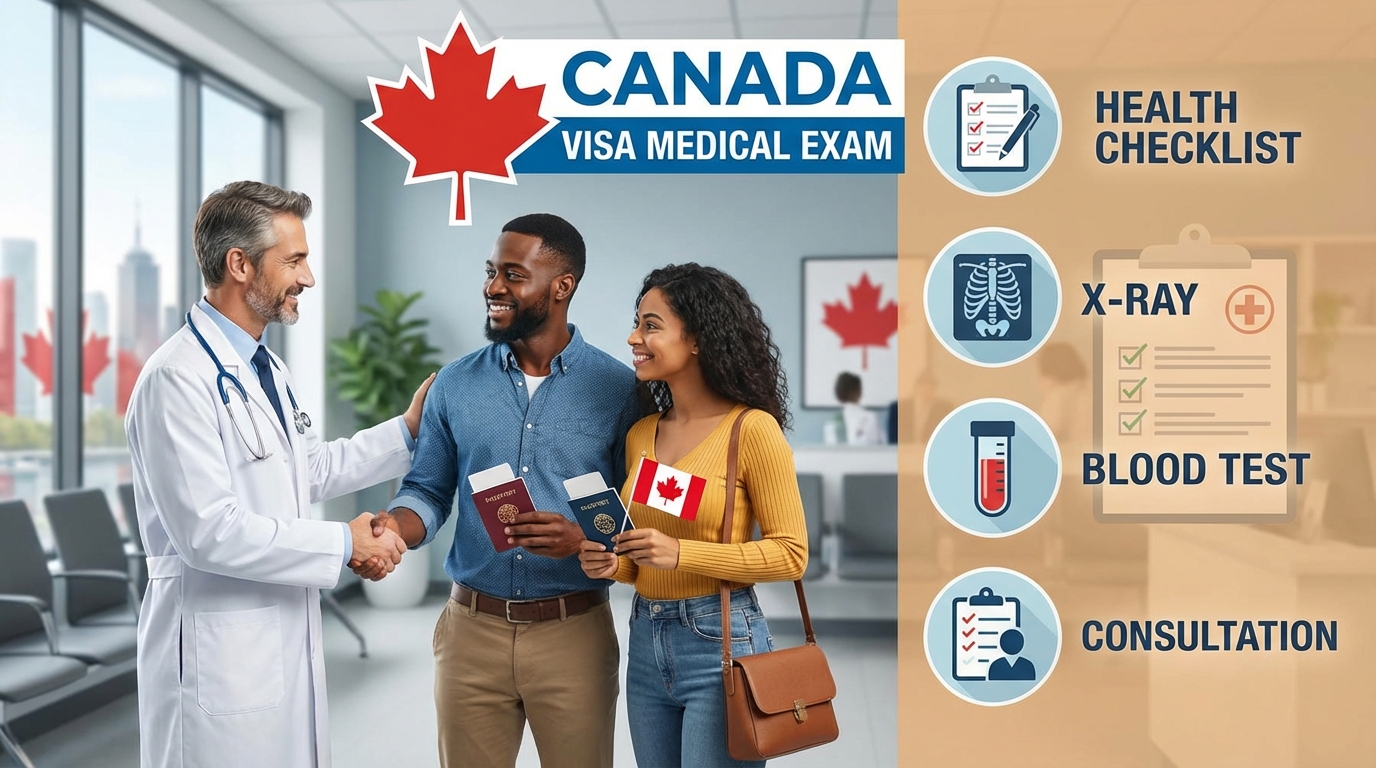
In this guide, you will learn exactly what happens behind the clinic doors—from the chest X-ray to the blood test—so you can walk in prepared, avoid accidental “red flags,” and ensure your medical results don’t delay your study permit.
Step 1: Booking the Right Appointment (The “Panel” Rule)
You cannot just go to your family doctor. Canada Immigration (IRCC) will reject any result that does not come from a Panel Physician.
Who are Panel Physicians? These are specific doctors authorized by the Canadian government to conduct immigration medical exams (IMEs).
- Finding them: You must use the official IRCC “Find a Panel Physician” tool.
- The backlog: In cities like Lagos, Mumbai, or Delhi, appointments can be booked out for weeks.
Upfront vs. Requested Medicals:
- Upfront Medical: You take the test before you submit your visa application. You upload the proof (e-Medical sheet) with your application.
- Verdict: Highly Recommended. It speeds up processing.
- Standard Medical: You submit your application, wait for IRCC to send you a “Medical Request Form” (IMM 1017), and then go to the doctor.
- Verdict: Slower. It adds 4-8 weeks to your timeline.
Pro Tip: If you are a female student, track your menstrual cycle before booking. If you are on your period, the urinalysis (urine test) will likely show blood, which triggers a false alarm for kidney issues. You will be forced to return and pay for a re-test. Book your appointment for at least 4-5 days after your period ends.
Step 2: The Documents and “The Zone”
When you arrive at the clinic (e.g., Q-Life or IOM in Lagos, or Max Healthcare in Delhi), it runs like a factory line. You are one of hundreds. Organization is key.
What to Bring:
- Original Passport: If your passport is with the embassy, you usually cannot do the medical. You need the physical ID.
- Letter of Acceptance (LOA): Printed copy (some clinics ask for this to confirm your category).
- Eyeglasses/Contact Lenses: If you wear them, bring them.
- Previous Medical Records: If you have a history of Tuberculosis (TB), major surgery, or chronic illness, bring the detailed reports from your specialist.
- Vaccination Card: Especially for COVID-19 or Yellow Fever (if applicable to your region).
- 4 Passport Photos: (Only if the clinic is not e-Medical enabled, though most are now digital).
The Intake: You will fill out a questionnaire about your history.
- Question: “Have you ever had TB?”
- Question: “Do you have HIV?”
- Question: “Have you had major surgery?”
- Warning: Lying here is “Misrepresentation.” If they find a surgical scar on your chest during the physical exam that you didn’t declare, you are in trouble.
Pro Tip: Drink plenty of water 1-2 hours before your appointment. You need to provide a urine sample on demand. If you are dehydrated, it is difficult, and concentrated urine can sometimes show higher protein levels, triggering further tests.
Step 3: The Three Main Tests
Once you are in the gown, the process is swift.
1. The Chest X-Ray (The TB Hunter)
This is the most critical part for students from high-TB-burden countries (India, Nigeria, Philippines).
- The Goal: They are looking for scarring or spots on the lungs that indicate active or inactive Tuberculosis.
- The Process: You stand against a machine, take a deep breath, and hold it.
- The Risk: If there is any shadow, they will not pass you immediately. They will require a “Sputum Culture Test” (coughing into a cup for 3 days) which takes 8 weeks to process. This will delay your visa by 2 months.
2. The Blood Test (Syphilis and Creatinine)
- HIV: They test for HIV status. HIV+ status is not an automatic rejection, provided your viral load is managed and won’t cost the Canadian system excessive amounts (the “Excessive Demand” threshold is quite high now).
- Syphilis: They test for untreated syphilis. If positive, you must get treated before the visa proceeds.
- Creatinine: Checks kidney function.
3. The Urinalysis (The Kidney Check)
- The Goal: Detecting blood, protein, or sugar in urine.
- Diabetes/Kidney Disease: High sugar/protein can indicate these issues. Canada is wary of applicants who might need dialysis in the future.
Pro Tip: Do not eat a strictly high-sugar breakfast (like 3 donuts and a soda) right before the test. While it won’t give you diabetes, it can spike your blood sugar temporarily. Eat a normal, balanced meal. Fasting is not usually required, but check with your specific clinic.
Step 4: The Physical Exam (The “Poke and Prod”)
Finally, you see the doctor.
- Vision Test: Read the letters on the wall.
- Vitals: Blood pressure and weight. High blood pressure is common due to anxiety (“White Coat Syndrome”). If it is high, ask to sit quietly for 10 minutes and re-test.
- Body Check: The doctor will listen to your heart and lungs. They may check your abdomen for organ swelling.
- The Scars: They will look for surgical scars. If you have a C-section scar or an appendectomy scar, just explain it. It’s fine.
After the Exam: You do not get the results. The doctor sends them directly to IRCC via the e-Medical portal. You will receive an e-Medical Information Sheet (a printout with a barcode).
- Action: You must scan this sheet and upload it to your visa application portal under “Proof of Medical Exam.”
Sample/Template Section: The Pre-Appointment Checklist
Do not walk out the door without checking these items. Copy this to your phone.
Plaintext
[CANADA VISA MEDICAL EXAM: DAY-OF CHECKLIST]

DOCUMENTS BAG:
[ ] Original International Passport (Valid).
[ ] 2-3 Photocopies of the Passport Bio-page.
[ ] IMM 1017 Form (Only if you are doing a "Requested" medical).
[ ] COVID-19 Vaccination Card (Original + Copy).
[ ] Glasses or Contact Lenses case.
[ ] List of any current medications (names and dosage).

PERSONAL PREP:
[ ] Drink 1L of water (for urine test).
[ ] Eat a light, non-sugary meal.
[ ] Wear loose clothing (easy to change into a hospital gown).
[ ] If female: Confirm period ended 4+ days ago.
[ ] Cash/Card for payment (Check clinic policy - some don't accept cash).

HISTORY TO DECLARE (Be Honest):
[ ] Previous surgeries (Appendicitis, C-Section, etc.).
[ ] History of Tuberculosis (Personal or Family contact).
[ ] Chronic conditions (Hypertension, Asthma, Diabetes).
[ ] Tattoos (Sometimes leads to Hepatitis screening).
Common Mistakes to Avoid
- Concealing Past Tuberculosis: “I had TB 5 years ago, but I was treated, so I won’t mention it.”
- The Consequence: The X-ray will see the scar tissue. If you checked “No” on the form but the X-ray shows scarring, the doctor will flag you for inconsistency. It is always better to say, “Yes, I had it in 2019, here is my discharge certificate.”
- Using a Non-Panel Physician: “My uncle is a doctor, he did the check-up.”
- The Consequence: Immediate rejection of the medical document. IRCC will not look at it. You will lose time and have to pay again for a real Panel Physician.
- Applying for the Visa Without the e-Medical Sheet: Forgetting to upload the “Proof of Medical” sheet because you thought the doctor sent it.
- The Consequence: The visa officer will open your file, see no medical proof, and pause your application or reject it as incomplete (if applying under a specific stream like SDS). You must upload the “acknowledgment sheet” the doctor gave you.
FAQ
Q: I have high blood pressure. Will I be rejected? A: Generally, no. Hypertension is manageable. The doctor may note it and might ask for a report from your cardiologist showing it is under control. Rejection happens for conditions that are “Excessive Demand” (costing Canada >$120,000 over 5 years) or a public safety risk (Active TB, untreated Syphilis, severe aggressive psychosis).
Q: How long are the medical results valid? A: They are valid for 12 months from the date of the exam. If your visa processing takes 13 months (which happens in delays), IRCC will ask you to do a new medical exam. You cannot extend the old one.
Q: Can I drink alcohol the night before? A: It is strongly advised not to. Alcohol can dehydrate you and temporarily affect liver enzyme markers in the blood. Stay sober and hydrated for at least 24 hours before the test to ensure the cleanest possible results.